_edited.png)
It All Starts With the Right Fit: How to Measure for Your Hidden Bookshelf Door
Planning a hidden bookshelf door?
One of the first things you need to know is what size you need.
A few simple measurements can help determine whether one of our standard Hidden Bookshelf Doors will suit your space or whether a custom size may be the better option.
You’ll need four measurements: door width, door height, casing width and jamb width.

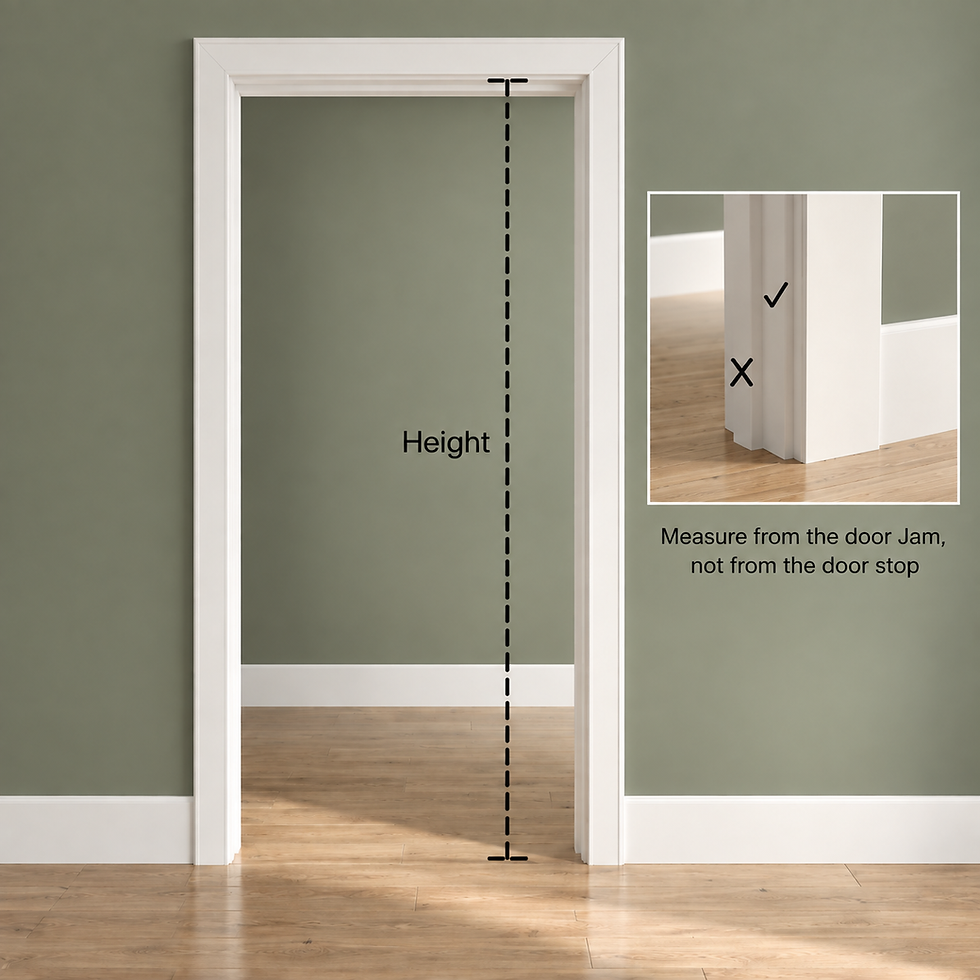
1. Door Height
First, measure the height of your door opening, starting from the finished floor and measuring vertically to the top of the opening.
We recommend measuring the height on both the left and right sides. This is especially helpful with existing homes, where floors and openings may not be completely level or square.
Again, record the exact measurements in millimeters. If you're currently renovating and your final flooring hasn't been installed yet, make a note of this when sending us your measurements.

2. Door Width
Next, measure the width of your door opening. Measure horizontally from one side of the opening to the other, without including the surrounding casing or trim. For the most accurate result, take a measurement near the top, middle and bottom of the opening. Existing doorways aren't always perfectly square, so there may be slight differences between each measurement.
Record each measurement in millimeters and avoid rounding up or down — accuracy here will help us determine the right size for your opening.

3. Trim Width
To measure your trim, place your tape across the face of the trim and measure from the inside edge to the outside edge. If the trim varies in width, take a couple of measurements and record them for us.
If you're working with a new opening and your trim hasn't been installed yet, that's okay — just let us know when you send through your measurements .
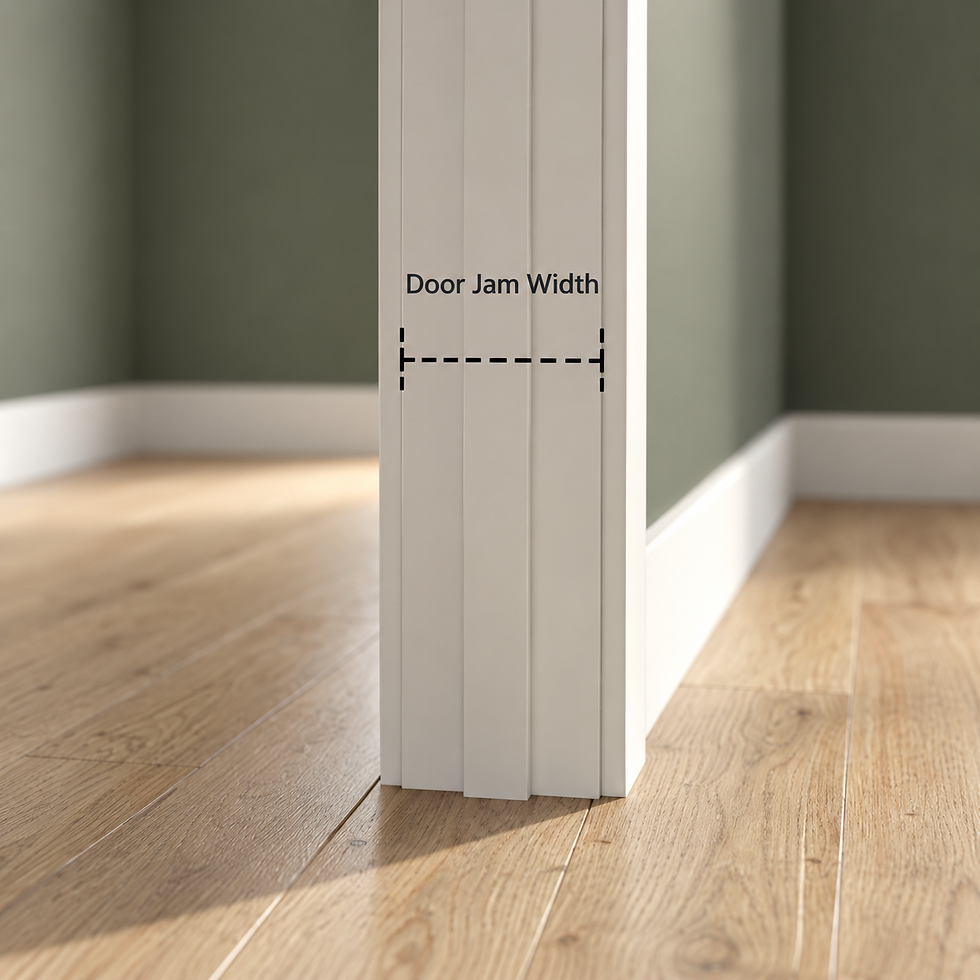
4. Door Jamb Width
The door jamb is the inside surface of your doorway, running through the depth of the opening between the walls. To find the jamb width, measure from one finished wall face to the other, across the depth of the doorway. This measurement helps us understand the thickness of the finished wall and the jamb required for your hidden door. Take the measurement in a few places if possible, particularly with an existing opening, and record the measurements in millimeters.
Standard or Custom?
Once you have these four measurements, you can start working out which RHP Hidden Bookshelf Door is right for your space.
If your opening suits our standard sizes, you're ready to explore the available options. If your measurements fall outside our standard range, talk to us about a custom solution.

Ready to Find Your Fit?
Grab a tape measure and note down your door width, door height, trim width and jamb width in millimeters.
With those four measurements, we can help you determine whether a standard or custom Hidden Bookshelf Door is right for your space.
Measure. Plan. Then go Beyond the Wall.


Comments